How to Get Rid of Spider Mites Naturally
Garden Soap Team
· 8 min read
Recognizing Spider Mites Before They Take Over
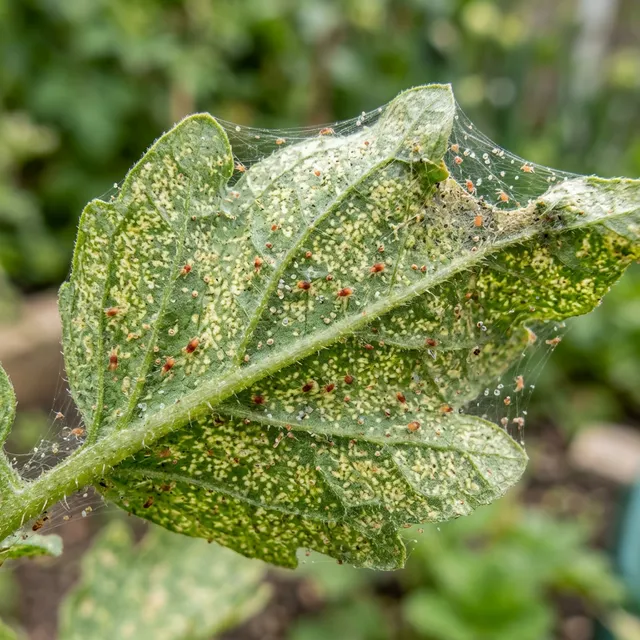
Spider mites are barely visible to the naked eye — most species are smaller than a pinhead. By the time you notice damage, the colony is usually weeks old and thousands strong. Catching them early is everything.
Here’s what to look for:
- Fine stippling on leaves — tiny pale dots where mites have punctured cells and sucked out chlorophyll
- Bronze or yellow discoloration spreading from the center of leaves outward
- Fine silk webbing on leaf undersides and between stems, especially in branch crotches
- Dusty appearance on leaf undersides — that “dust” is a colony of mites and their eggs
Hold a piece of white paper under a suspect leaf and tap the leaf sharply. If tiny specks fall onto the paper and start crawling, you’ve confirmed spider mites.
Two-spotted spider mites (Tetranychus urticae) are the most common species in gardens and on houseplants. They attack over 200 plant species, including tomatoes, peppers, beans, roses, and most houseplants.
Why Spider Mites Are So Hard to Kill
Three traits make spider mites a persistent problem:
Speed of reproduction. A single female lays 100-200 eggs in her two-to-four-week lifespan. In warm conditions (above 80°F), eggs hatch in three days and new adults start laying within a week. One mite becomes thousands in under a month.
Pesticide resistance. Spider mites are notorious for developing resistance to chemical miticides, sometimes within a single growing season. This is one reason natural methods often outperform synthetics for long-term mite control.
Webbing as defense. The silk webbing that spider mites produce isn’t just for movement — it shields colonies from predators and spray droplets. Heavy webbing can prevent contact sprays from reaching the mites underneath, so removing webbing before treatment matters.
Method 1: Insecticidal Soap Spray
Soap spray is the first-line treatment for spider mites on both houseplants and garden crops. Research confirms that potassium-salt-based insecticidal soaps achieve 80-90% kill rates against spider mites on direct contact.
The Recipe
- 1 tablespoon pure liquid castile soap (Dr. Bronner’s Unscented)
- 1 quart distilled or filtered water
- Optional: 1 teaspoon vegetable oil for better leaf coverage
Hard water reduces soap spray effectiveness because calcium and magnesium ions bind with the fatty acids. Use distilled or filtered water for best results. Our complete insecticidal soap recipe guide covers every detail of mixing and application.
Application Strategy for Spider Mites
Spider mites demand a more aggressive spray schedule than aphids or whiteflies because of their webbing and rapid reproduction:
- Remove visible webbing first — wipe it off with a damp cloth or rinse the plant with water. Webbing blocks spray from reaching the mites underneath.
- Spray every surface — tops and bottoms of every leaf, stems, and branch crotches where mites congregate.
- Drench the undersides — this is where 90% of the mite population lives. Flip every leaf.
- Repeat every 4-5 days for three applications — spider mite eggs hatch in 3-5 days, and soap doesn’t kill eggs. Each spray catches the newly hatched nymphs before they mature and lay more eggs.
| Spray | Timing | Target |
|---|---|---|
| First | Day 1 | Active adults and nymphs, webbing removal |
| Second | Day 4-5 | Newly hatched nymphs from surviving eggs |
| Third | Day 8-10 | Remaining nymphs, breaks the cycle |
| Monitoring | Weekly after | Spot-treat any new activity immediately |
For a deep dive into soap-based mite treatment, see our dedicated insecticidal soap for spider mites guide.
Method 2: Neem Oil
Where soap kills on contact, neem oil provides systemic protection that keeps working between spray sessions. Azadirachtin — the active compound in cold-pressed neem oil — disrupts mite feeding, reproduction, and molting.
Neem spider mite treatment: Mix 2 teaspoons cold-pressed neem oil with 1 tablespoon castile soap and 1 quart warm water. The soap acts as an emulsifier, keeping the oil mixed in water. Apply every 7-10 days.
Neem is especially useful because it also suppresses spider mite reproduction. Treated females lay fewer viable eggs, which slows colony regrowth between sprays. Combine neem with soap spray for a one-two approach: soap for immediate knockdown, neem for ongoing protection.
Temperature caution: Don’t apply neem oil when temperatures exceed 90°F. The oil can burn leaf tissue in extreme heat. Morning or evening applications avoid this risk.
Method 3: Water Spray
A forceful water spray knocks spider mites off plants and destroys their webbing. This is the simplest method and works well for mild infestations on sturdy garden plants.
For houseplants, take infested plants to the shower or bathtub and spray them thoroughly with lukewarm water, focusing on leaf undersides. For garden plants, use a hose-end sprayer set to a focused stream.
Water spray is effective because spider mites can’t climb back easily once dislodged, and destroying the webbing exposes remaining mites to predators. It also raises the local humidity around the plant, which spider mites hate.
Daily water misting of houseplant leaves during dry winter months helps prevent spider mite infestations from starting. Spider mites thrive at low humidity (below 40%), so keeping humidity above 50% makes your plants a less attractive target.
Method 4: Predatory Mites
Nature’s best spider mite solution is other mites. Predatory mites in the genus Phytoseiulus and Neoseiulus feed exclusively on spider mites and their eggs, and a healthy predator population can eliminate a spider mite colony entirely.
Best Predatory Mite Species
Phytoseiulus persimilis — the gold standard for spider mite biocontrol. Each predator eats 5-7 adult spider mites or 20+ eggs per day. They reproduce faster than their prey in ideal conditions (60-80°F, above 60% humidity). Available from online biocontrol suppliers.
Neoseiulus californicus — more tolerant of heat and low humidity than P. persimilis. Works in hot, dry garden conditions where P. persimilis struggles. Slower to establish but persists longer in the garden after spider mite populations decline.
How to Use Predatory Mites
- Stop all spraying (including soap and neem) at least 48 hours before releasing predators
- Release predatory mites directly onto infested leaves where prey is abundant
- Maintain humidity above 50% for best predator establishment
- Don’t expect instant results — predatory mites need 2-4 weeks to build populations large enough to overwhelm the spider mite colony
Predatory mites are most cost-effective in greenhouses and on high-value crops where repeated chemical treatment is expensive or undesirable.
Method 5: Rubbing Alcohol
Isopropyl alcohol kills spider mites on contact by dissolving their waxy coating. It’s most practical for small infestations on houseplants where you can target individual colonies.
How to apply: Dip a cotton ball or cotton swab in 70% isopropyl alcohol diluted 1:1 with water. Wipe each infested leaf individually, paying close attention to the undersides. For larger plants, spray the diluted alcohol from a mist bottle.
Alcohol evaporates quickly, so it won’t leave residue. But it can damage sensitive foliage — always test on a single leaf and wait 24 hours before treating the whole plant. Avoid using alcohol on ferns, calathea, and other thin-leaved tropical plants.
Method 6: Essential Oil Spray
Certain essential oils have demonstrated acaricidal (mite-killing) properties in research. Rosemary oil and peppermint oil are the most effective against two-spotted spider mites.
Essential oil spider mite spray: Add 10-15 drops of rosemary essential oil and 1 tablespoon castile soap to 1 quart of water. Shake well before each use. The rosemary oil provides both contact toxicity and residual repellent effect for 2-3 days.
This method is best as a supplement to soap spray rather than a standalone treatment. The essential oils add a repellent barrier that slows recolonization between your main soap or neem spray applications.
Preventing Spider Mite Infestations
Treatment is reactive. These practices keep spider mites from gaining a foothold:
Raise the humidity. Spider mites flourish in dry air below 40% relative humidity. Grouping houseplants together, using a humidifier, or misting leaves daily makes your growing environment hostile to mites. In the garden, drip irrigation and mulching maintain soil moisture that increases the microclimate humidity around plant canopies.
Inspect new plants. Spider mites frequently hitchhike on nursery stock. Examine every new plant purchase — especially the leaf undersides — before bringing it near your existing collection. A two-week quarantine in a separate room prevents introducing mites to your whole garden.
Remove dust from leaves. Dusty leaves are more susceptible to spider mite establishment. Wipe houseplant leaves with a damp cloth monthly. In the garden, overhead watering once a week washes dust off leaves and creates the humidity mites avoid.
Avoid over-fertilizing with nitrogen. Like aphids, spider mites are attracted to the lush, tender growth that excess nitrogen produces. Balanced fertilization grows sturdier plants that resist mite feeding damage better.
Encourage natural predators. In outdoor gardens, planting dill, fennel, and yarrow attracts predatory mites, lacewings, and other beneficial insects that keep spider mite populations in check. Check our companion planting guide for the best predator-attracting plants.
The Layered Approach
No single method solves a spider mite problem permanently. Stack these strategies:
- Prevent — humidity management, clean leaves, quarantine new plants
- Detect early — weekly inspections with the white paper tap test
- Water first — strong spray to dislodge mites and destroy webbing
- Soap spray — three applications, 4-5 days apart, for active infestations
- Neem follow-up — systemic protection between soap spray rounds
- Predatory mites — for persistent or large-scale infestations
- Environment — fix the dry, hot conditions that favor spider mites over their predators
This integrated approach mirrors the same IPM principles that professional growers use in greenhouses. It takes more attention than reaching for a miticide, but it produces lasting results without driving resistance or killing beneficial insects.
Start with the soap spray for immediate relief. Then address the underlying conditions — especially humidity — to break the cycle for good.
Frequently Asked Questions
What kills spider mites instantly and naturally? ▼
A direct spray of insecticidal soap (1 tablespoon pure castile soap per quart of water) kills spider mites on contact within minutes. The soap dissolves the mites' protective coating, causing rapid dehydration. You must hit them directly — soap has no residual effect once it dries.
Can spider mites infest your whole house? ▼
Spider mites can spread from plant to plant indoors, but they don't infest furniture, carpets, or humans. They need living plant tissue to survive. Isolating infested plants immediately and treating them with soap spray prevents spread to your other houseplants.
Why do spider mites keep coming back? ▼
Spider mites thrive in hot, dry conditions and reproduce extremely fast — a female lays up to 20 eggs per day. If you only spray once, surviving eggs hatch within days and restart the colony. You need at least three treatments spaced 5-7 days apart to break the reproduction cycle.
Does rubbing alcohol kill spider mites? ▼
A 70% isopropyl alcohol solution kills spider mites on contact when dabbed directly onto colonies. However, alcohol can burn plant tissue on sensitive species. Dilute 1 part alcohol to 1 part water, test on a single leaf first, and only use on sturdy-leaved plants like roses or fruit trees.
Are spider mites harmful to humans? ▼
Spider mites do not bite humans, carry diseases, or cause allergic reactions. They are strictly plant pests. The only health concern is potential skin irritation from handling heavily webbed plants, and that is caused by the fine webbing, not the mites themselves.
 ✓
✓ The Garden Soap Team writes every recipe and guide on this site. Formulas follow published horticultural guidance — university extension resources, the UC IPM program, and OMRI standards — and we cross-check concentrations and plant-safety warnings against documented gardener experience before publishing. No harsh chemicals, no guesswork passed off as expertise.
📚 Related Articles
guidesInsecticidal Soap for Spider Mites
Spider mites are tiny, destructive, and multiply fast. Insecticidal soap is your best organic defense. Here's exactly how to use it.
 recipes
Neem Oil Insecticidal Soap Spray
Combine the pest-killing power of insecticidal soap with neem oil's systemic protection. This recipe handles tough infestations that plain soap can't beat.
 guides
How to Get Rid of Aphids Naturally
Every proven natural method for killing and repelling aphids — from soap sprays to beneficial insects to companion planting. No chemicals needed.